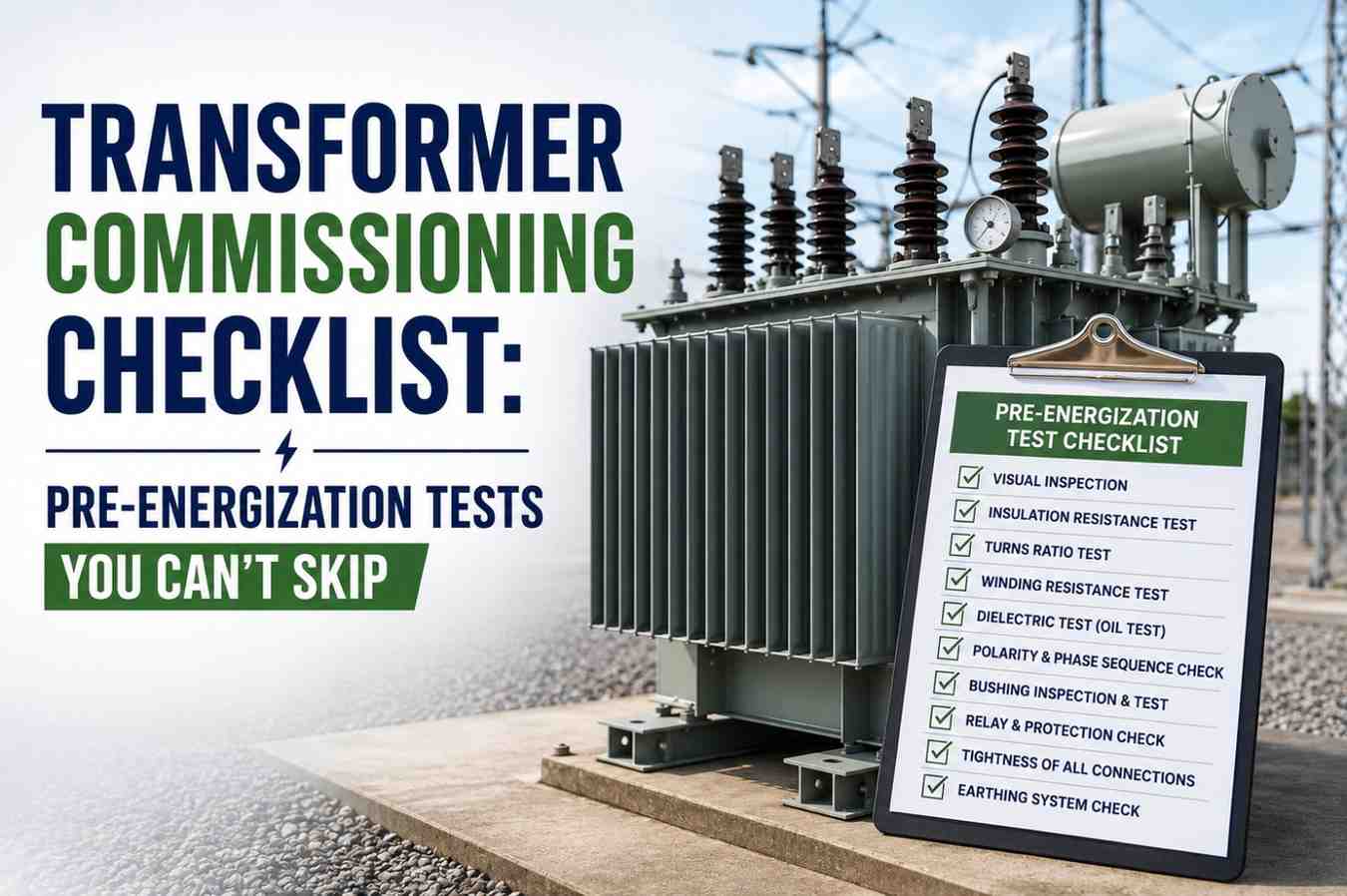
Transformer Commissioning Checklist: Pre-Energization Tests You Can’t Skip
Installing a transformer is a major investment, but the job isn’t finished once it’s placed on-site. Before the transformer is connected to the power supply, it must pass a series of inspections and tests to confirm it’s safe and ready to operate. Skipping even one important step can lead to equipment failure, costly repairs, or unexpected downtime.
That’s where a transformer commissioning checklist becomes essential. Think of it as the final quality check before the transformer is switched on. It helps engineers confirm that every component is working correctly and that the transformer is prepared to handle electrical loads safely.
In this blog, we’ll cover the most important pre-energization tests that should always be part of a professional commissioning process.
What Is a Transformer Commissioning Checklist?
A transformer commissioning checklist is a step-by-step process followed after installation and before energization. It includes inspections, electrical testing, and performance verification to ensure the transformer is installed correctly and meets operational standards.
Whether you’re commissioning a distribution transformer or handling Power Transformer Commissioning for an industrial facility, this checklist helps identify hidden issues before they turn into expensive problems.
Instead of reacting to failures later, commissioning focuses on preventing them from happening in the first place.
Why Should You Never Skip Transformer Commissioning?
Even a brand-new transformer can develop issues if it’s damaged during transportation, installed incorrectly, or energized without proper testing. Some faults aren’t visible from the outside and can only be detected through professional testing.
Following a complete transformer commissioning checklist helps you:
- Detect installation errors early
- Improve equipment reliability
- Avoid unexpected breakdowns
- Increase transformer lifespan
- Ensure electrical safety
- Reduce future maintenance costs
Simply put, a few hours spent on proper commissioning can save days of downtime later.
Essential Pre-Energization Tests You Can’t Skip
Every transformer may have different specifications, but the following Transformer Pre-Commissioning Tests are considered standard before energization.
1. Start with a Thorough Visual Inspection
Before using any testing equipment, engineers perform a complete visual inspection.
This includes checking:
- Oil leakage
- Damaged bushings
- Loose nuts and bolts
- Nameplate details
- Cable connections
- Paint damage or corrosion
- Cooling system condition
Many installation-related issues can be identified during this simple but important step.
2. Insulation Resistance (IR) Test
One of the most important tests in any transformer commissioning checklist is the Insulation Resistance (IR) Test.
This test measures the condition of the transformer’s insulation between windings and earth. Low insulation values may indicate moisture, contamination, or insulation damage that could lead to electrical faults after energization.
Healthy insulation is the foundation of a reliable transformer.
3. Transformer Turns Ratio (TTR) Test
The Turns Ratio Test confirms that the winding ratio matches the manufacturer’s specifications.
If the readings don’t match the expected values, it may indicate winding damage or incorrect tap changer settings. Since voltage transformation depends on accurate winding ratios, this test plays a vital role in Transformer Testing and Commissioning.
4. Winding Resistance Test
Loose joints or damaged winding connections often remain hidden during visual inspections.
The winding resistance test helps identify these issues before they affect transformer performance. Detecting small abnormalities at this stage is far easier and less expensive than dealing with a transformer failure later.
5. Transformer Oil Testing
Transformer oil is more than just a cooling medium—it also acts as an electrical insulator.
While doing Transformer Pre-Energization Testing, engineers look into the oil dielectric strength, moisture, and general contamination. If the oil condition, for some reason, doesn’t fit the suggested specifications, then filtration or a straight replacement could end up being needed before commissioning.
Ignoring poor oil quality can reduce transformer life and increase the risk of internal faults.
6. Earthing System Verification
A properly grounded transformer is essential for both equipment protection and personnel safety.
The engineers ensure that the earth connections are all properly done and that the value of earth resistance is acceptable. Proper grounding ensures that the transformer is protected against any fault currents and lightning problems.
7. Functional Testing of Accessories
Modern transformers include several accessories that must operate correctly before the unit is energized.
These typically include:
- Tap changer
- Buchholz relay
- Temperature indicators
- Cooling fans
- Oil pumps
- Pressure relief devices
- Alarm and trip circuits
Every component should be tested to ensure it responds exactly as designed.
8. Protection Relay Testing
Protection relays act as the transformer’s safety system.
Before energization, engineers verify that the relays detect faults accurately and send trip signals when required. This step is especially important during Power Transformer Commissioning, where even a minor protection issue can lead to serious equipment damage.
Common Mistakes During Transformer Commissioning
Many transformer problems aren’t caused by manufacturing defects—they happen because important commissioning steps were rushed or skipped.
Some common mistakes include:
- Energizing the transformer without completing all tests
- Ignoring abnormal insulation readings
- Overlooking oil quality
- Loose cable terminations
- Incorrect tap changer settings
- Poor grounding
- Missing commissioning records
Following a complete transformer commissioning checklist helps eliminate these avoidable risks.
Why Professional Testing Makes a Difference
Commissioning isn’t just about ticking boxes on a checklist. Every test result must be interpreted correctly to determine whether the transformer is genuinely ready for operation.
Working with experts who provide Transformer Testing Service kind of make sure the transformer is tested using calibrated instruments and industry-approved procedures. Professional engineers may spot some hidden issues that might not seem obvious during a routine inspection, and this helps prevent later failures, also improving long-term reliability.
Conclusion
A properly carried out transformer commissioning checklist is among the essential activities to be undertaken before the transformer is energized. This checks whether the installation has been done appropriately, the state of the important parts and that the transformer operates safely under the load conditions.
From insulation resistance and oil analysis to grounding verification and relay testing, each step inside the Transformer Commissioning Procedure kinda matters a lot for safer and more dependable performance. When you finish the important Transformer Pre-Commissioning Tests, organizations can cut down on downtime, steer clear of costly repairs, and also stretch the service life of their equipment.
Whether you are commissioning a fresh transformer or doing an upgrade on an already existing power system, don’t overlook the worth of proper Transformer Testing and Commissioning. A careful look today can stop major operational troubles tomorrow, and it’s kind of a quiet safeguard.