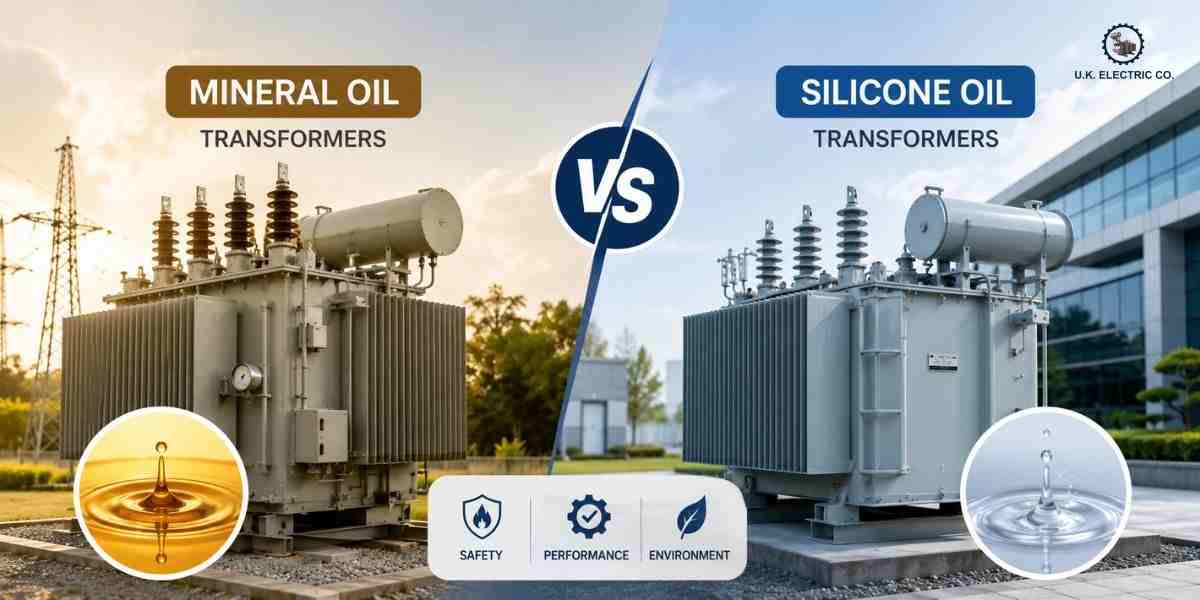
Mineral Oil vs Silicone Oil Transformers: Which One Do You Need?
Choosing between a mineral oil transformer and a silicone oil transformer is not simply a matter of picking whichever fluid sounds more advanced. The insulating liquid affects transformer insulation, heat transfer, fire safety, maintenance, and long-term reliability. If your transformer needs attention, professional Electrical Transformer Repair Services can also help determine whether the existing insulating system remains suitable.
The key question is not which oil is better. It is: Which insulating fluid fits the transformer, installation environment, and risk profile? Mineral insulating oils remain a well-established choice, while silicone insulating liquids offer a different set of characteristics, particularly around fire behaviour. The International Electrotechnical Commission (IEC) maintains separate standards for mineral insulating oils and silicone insulating liquids used in transformers.
What Is Mineral Oil in a Transformer?
Mineral insulating oil has been used in electrical equipment for decades because it performs two essential jobs: electrical insulation and heat transfer. IEC 60296:2020 covers mineral insulating oils intended for transformers, switchgear, and similar equipment where the liquid provides insulation and heat transfer.
In a conventional oil-immersed transformer, the liquid surrounds components such as the transformer winding and core. As the transformer operates, the oil helps transfer heat away from internal components toward the cooling system, where that heat can dissipate.
This makes mineral oil a practical choice for many power transformer and distribution transformer applications.
Mineral oil also has a mature supply and maintenance ecosystem. Technicians have extensive experience with oil testing, purification, moisture control, and condition monitoring. However, mineral oil is still a hydrocarbon-based insulating liquid, so fire risk must form part of the installation and protection assessment.
What Is Silicone Oil in a Transformer?
Silicone insulating liquid is another type of transformer insulating oil, although technically it is a silicone-based insulating liquid rather than a mineral oil.
IEC 60836:2015 specifically covers unused silicone insulating liquids intended for transformers and other electrotechnical equipment. The standard notes that silicone transformer liquid has high flash and fire points and is difficult to ignite. It also states that, if combustion occurs, the heat release rate is much lower than that of hydrocarbon oils.
That characteristic makes silicone transformer oil particularly interesting for applications where transformer fire safety carries significant weight.
IEC 60836 specifies minimum flash and fire points for its defined silicone transformer liquid specification. However, those values apply to the specified unused liquid under the standard’s testing conditions; they should not become a blanket claim about every silicone product on the market.
Also Read: Transformer Commissioning Checklist: Pre-Energization Tests You Can’t Skip
Mineral Oil vs Silicone Oil: Key Differences
Now we can get to the part that actually matters: the mineral oil vs silicone transformer oil comparison.
1. Fire Safety
Fire behaviour is one of the clearest differences.
Mineral oil is a hydrocarbon-based insulating fluid. Silicone transformer liquid has substantially higher flash and fire points under the IEC 60836 specification, and the standard describes it as difficult to ignite.
For installations where enhanced fire safety matters, such as certain indoor or space-constrained applications, silicone liquid may therefore deserve serious consideration.
That does not mean a silicone oil transformer is “fireproof.” Transformer design, protection equipment, installation, ventilation, clearances, and emergency procedures still matter.
2. Cooling and Heat Transfer
Both fluids can provide the insulation and heat-transfer functions required in appropriately designed transformers.
The important point is that you should not choose a transformer cooling oil based on one property alone. Transformer manufacturers design the winding, radiator, tank, insulation system, and cooling arrangement around specific operating conditions.
Silicone liquids can operate at similar working temperatures to mineral-oil transformers and, in appropriately designed equipment, can also be used at higher temperatures, according to IEC 60836.
So, instead of assuming that one fluid always provides “better cooling,” compare the complete transformer cooling system and manufacturer’s specifications.
3. Electrical Insulation
Both mineral and silicone fluids serve as transformer dielectric fluid in suitable equipment.
Properties such as dielectric strength, moisture content, acidity, viscosity, and dielectric dissipation factor influence insulating-fluid performance. IEC 60296 establishes requirements and test methods for mineral insulating oils, while IEC 60836 establishes requirements and test methods for silicone insulating liquids.
This is why phrases such as “superior dielectric strength” should be treated carefully. A fluid should meet the requirements for the particular transformer rather than being labelled universally superior.
4. Moisture Behaviour
Moisture deserves special attention because it can affect transformer insulation performance.
Interestingly, IEC 60836 notes that water solubility in silicone liquids is greater than in mineral oils.
That does not mean moisture becomes harmless. It means technicians need to understand the fluid’s properties and use appropriate testing and maintenance practices.
For either mineral oil transformer oil or silicone liquid, condition monitoring remains important for dependable insulation and long-term reliability.
Mineral Oil vs Silicone Oil Transformer: Which Is More Cost-Effective?
There is no honest universal answer.
Mineral oil can be attractive for conventional applications because it is a mature and widely used insulating-fluid technology. Silicone liquid can make sense when its fire-performance characteristics justify the additional investment.
The correct comparison should consider:
- Transformer purchase cost
- Insulating-fluid cost
- Installation requirements
- Cooling-system design
- Fire protection requirements
- Testing and maintenance
- Fluid handling requirements
- Downtime risk
- Expected operating conditions
- Long-term maintenance expenses
In other words, don’t compare two oil prices and declare a winner. Transformers, unfortunately, do not read spreadsheets.
For a critical installation, the potential value of operational safety, reduced maintenance risk, and reliable transformer performance can outweigh a higher initial investment.
Which Transformer Oil Should You Choose?
The choice between silicone oil vs mineral oil transformer applications should start with the transformer manufacturer’s design and the site’s requirements.
Mineral Oil May Suit You When:
- You need a conventional insulating-fluid solution.
- The transformer operates in a standard utility or industrial environment.
- The installation can accommodate the relevant fire-safety measures.
- Established mineral-oil testing and maintenance practices are important.
- The transformer design specifically calls for mineral insulating oil.
Silicone Oil May Suit You When:
- Fire risk deserves particular attention.
- The installation has demanding fire-safety considerations.
- You need an insulating liquid with high flash and fire points.
- The transformer manufacturer approves the silicone fluid for the application.
- The site’s operating conditions justify its characteristics and cost.
The decision should always consider the complete transformer insulation fluid system rather than the liquid in isolation.
Maintenance Matters After You Choose the Fluid
Choosing the right transformer oil types is only the beginning. The fluid needs appropriate inspection and testing throughout the transformer’s service life.
For mineral-oil equipment, condition monitoring can include checks related to moisture, breakdown voltage, acidity, dielectric dissipation factor, and other relevant oil properties. IEC 60296 defines specifications and test methods for mineral insulating oils, while IEC 60422 provides guidance related to the supervision and maintenance of mineral insulating oils in electrical equipment.
Contaminated insulating liquid can affect both insulation and heat transfer. U.K. Electric Co. provides Transformer Oil Filtration Services using ultra- and high-vacuum filtration equipment. The company states that its facilities include 3,200-litre and 6,000-litre plants for transformer oil dehydration and filtration.
If maintenance temporarily takes a transformer out of operation, Transformer On Rent can also provide a temporary power option where the project requirements make rental practical.
How U.K. Electric Co. Can Help
U.K. Electric Co. has operated in transformer repair, servicing, and modification since 1978, according to its official company information. The company states that it works with power and distribution transformers of various makes, up to 25 MVA and 132 kV class, and provides repair, testing, oil treatment, and related services.
That experience matters when an existing transformer needs assessment rather than a simple oil change. The condition of the transformer bushing, transformer winding, transformer core, transformer tank, transformer radiator, conservator tank, breather, Buchholz relay, tap changer, and transformer protection system can all form part of a wider maintenance assessment, depending on the transformer design.
U.K. Electric Co. also offers repair, rewinding, testing, overhauling, leakage arresting, oil filtration, and transformer rental services.
For businesses that need professional electrical transformer repair services, this broader approach can be more useful than focusing on insulating liquid alone. The company can assess the equipment’s condition and maintenance requirements before recommending the appropriate service.
Final Verdict: Mineral Oil or Silicone Oil?
So, mineral oil vs silicone transformer oil: which one do you need?
Mineral oil remains a practical choice for many conventional oil-filled transformers, while silicone oil can be a better option where fire safety and high fire-point performance are priorities.
The right choice depends on your transformer design, operating conditions, safety requirements, and manufacturer specifications.
Need help choosing the right solution? Contact U.K. Electric Co. today for professional transformer assessment, repair, and maintenance support.