Who Is Responsible for Transformer Maintenance During the Rental Period?
Transformers are key pieces of equipment for effective power distribution in industrial sites, office complexes, and similar facilities. They are used to transfer power between circuits of various voltages to ensure smooth functioning of the electrical system. Nonetheless, similar to any other electrical equipment, the transformer should undergo inspection and proper maintenance for effective operation. Transformer maintenance is useful in revealing possible issues that may lead to failure of the piece of equipment and ensures operational safety, minimises unexpected interruptions, and facilitates planning of repair work by the business. Regardless of whether your firm has its own transformer or rents one, proper maintenance could be extremely helpful. At U.K. Electric Co., we know the value of reliable transformer operation.
Why Is Regular Transformer Maintenance Important?
The transformer operates under electrical stress, thermal stress, and environmental stress. In such conditions, the transformer may be affected by its insulation, cooling system, connections, and other parts. The inspections help you spot any signs that would interrupt your normal activities. This may be through noise, overheating, oil leakage, or any other poor connection.
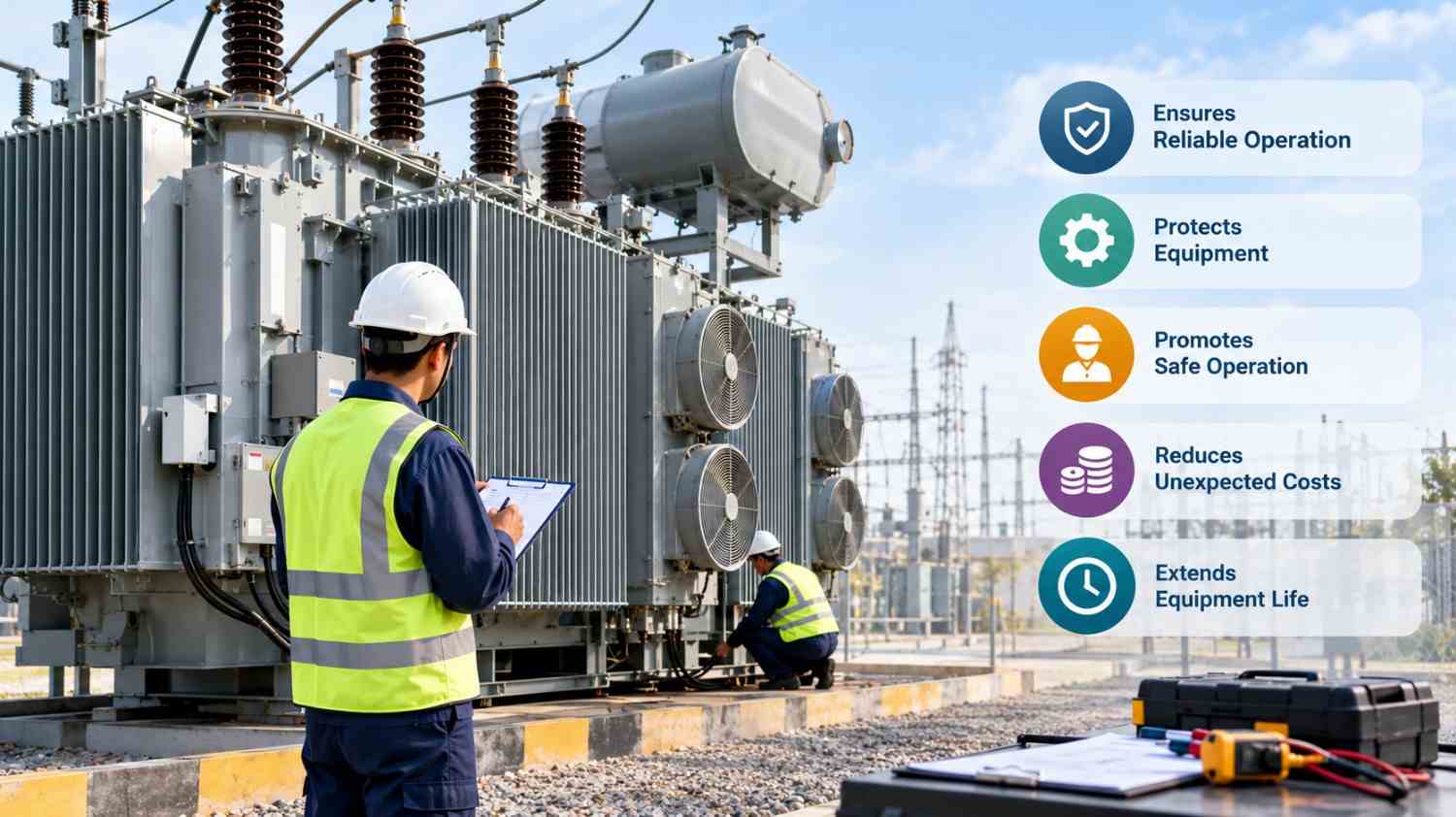
An effective maintenance schedule provides the following advantages:
- Reliability: Inspections assist in identifying developing problems that can cause unexpected interruptions.
- Protection of equipment: Early detection of any unusual situations will help avoid further damage.
- Safe operation: Qualified personnel will identify any potential hazards and suggest preventive steps.
- Costs of planned maintenance: With scheduled inspections, businesses can plan for their repairs rather than treating each problem as an emergency.
- Longer lifespan: With proper operating conditions and early repairs, transformer components can be protected.
It is not possible to eliminate all risks through maintenance. However, maintenance can provide businesses with a realistic approach towards managing equipment status. For installations that require a broader assessment of equipment condition, ask whether Transformer Health Check Services are appropriate for the specific transformer and its operating history.
Essential Transformer Maintenance Activities
A good maintenance programme must take into consideration the design of the transformer, its working conditions, the manufacturer’s guidelines and the maintenance records. There is no one-size-fits-all inspection list for all transformers.
1. Visual Inspection of Transformer Components
There are several issues that could be detected by visual inspection without the need of any additional tests. Professional staff must look out for oil leakage, corrosion, bushing damage, loose or decayed external parts, overheating and other similar issues. In addition, the surroundings of the transformer must be checked for lack of proper ventilation, dust, water or other environmental issues. It is important that one does not come into contact with any of the electrical parts when they are exposed or try to inspect an energised transformer without observing all the necessary safety measures.
2. Transformer Oil Level and Condition Checks
Insulating oil is used in oil-filled transformers for both electrical insulation and cooling purposes. The changes in the oil level, any leakage, or degradation of oil quality may suggest that some problem has occurred which requires further investigation. An oil level inspection for a transformer must be conducted in accordance with the manufacturer’s recommendations, taking into consideration the operating conditions of the equipment. In addition, a technician may suggest conducting an oil test for its moisture content, dielectric strength, acidity, and gas content, among others. The sampling and testing of the transformer oil must be conducted using the proper procedure. Normal oil level does not guarantee its good quality.
3. Temperature and Cooling System Inspection
High temperatures can influence the performance of insulation and lead to the early aging of machinery. Inspection of temperature gauges, fans, pumps, radiators, and other cooling mechanisms should be conducted by maintenance technicians. Inspection for any unusual variations in temperature levels and operation of cooling equipment should also be done. All of this is a significant part of power transformer maintenance, especially when the transformer feeds critical loads.
4. Electrical Connections and Protective Devices
Loose connections may lead to localized heating and hence the chances of damaging the equipment. Technicians are supposed to examine all connections, terminals, earthing, and protective devices according to standard procedures. Depending on the state and maintenance schedule of the equipment, they may conduct electrical testing of the insulation resistance, winding integrity, transformer ratio, and many other features. Different transformers need different tests. It is important that an expert determines what tests should be performed because not all tests need to be done.
How Often Should a Transformer Receive Maintenance?
It is not possible to set one standard time for maintaining transformers. The schedule for maintenance should be based on the instructions provided by manufacturers, operation of the equipment, age of the equipment, load cycles, environmental conditions, and past inspections.
Some equipment may require regular visual inspections, whereas some other types may need inspections and testing at predetermined intervals. For example, a transformer that operates in an environment where there are dust, humidity, or high temperatures might require different handling than equipment in a clean environment.
It is essential for businesses to keep records of all kinds of inspections, including test results, defects found, and corrective actions taken. Such records will help technicians make informed decisions about maintenance activities in the future. Consistent scheduling also facilitates coordination with production needs.
Maintenance Considerations for Rented Transformers
Sometimes there is a need for extra capacity of transformers on a temporary basis due to temporary projects, shutdowns, construction, or replacement purposes. This is where the service of renting transformers comes in useful without the necessity of purchasing it. Nevertheless, renting transformers does not relieve one from carrying out the necessary maintenance. This needs to be discussed prior to placing the transformer into service.
Understand the Transformer Rental Agreement
The agreement for transformer hire must indicate the equipment, the period of time to be hired, operating terms that have been agreed upon, maintenance and fault reporting procedures. It will also outline the party who will conduct inspections, repair authorisation, and procedures regarding damage to the equipment or a sudden breakdown. This makes maintenance less complicated.
Clarify Rental Period Maintenance Responsibilities
The customer and the supplier should first determine the maintenance schedule prior to renting out the machinery. This would involve the customer being responsible for doing the monitoring and leaving the professional maintenance of the machinery to the supplier. This will all depend on the contract. It is important for customers not to think that all repair and maintenance work lies within the responsibility of the rental company.
Follow Safe Operating and Monitoring Practices
In the course of the lease period, the competent staff members will have to watch out for the operating conditions, abnormal noise or overheating, and any sign of oil leakage in case of liquid-filled transformers. The same will apply to the maintenance of the agreed schedule and recording of any abnormal observations. In the process of renting a transformer, communication among the customer, site staff, and the supplier will be important. This is because early reports will allow the technician responsible to identify the problem even before it has spread into the whole system. Those businesses that wish to rent equipment can consider transformer on hire services.
Consult U. K. Electric Co. for Reliable Transformer Support Today
Transformer dependability depends on correct equipment, installation, handling, and a maintenance strategy that suits the prevailing conditions in the field. Inspection will play a key role in fault identification and in determining the measures that have to be taken to minimise disruption. Whether you opt for an existing installation or hiring of the equipment for a short period, think about a maintenance strategy that suits your requirements. Contact U.K. Electric Co. to sort out any questions on transformers that you may have regarding maintenance and equipment rental. This conversation will be helpful for you in making your decision.