Scrap Transformer vs Repairable Transformer: How to Identify the Right Choice
Scrap Transformer vs Repairable Transformer is one of the most common comparisons businesses make when a transformer starts showing signs of damage or poor performance. At first glance, it may seem easier to replace or scrap a faulty transformer, but that’s not always the right decision. In many cases, a transformer that appears damaged can still be repaired and returned to reliable service. The key is understanding its actual condition through a proper inspection rather than making assumptions based on age or appearance.
Whether you own an industrial facility, manufacturing unit, or commercial power system, knowing how to identify the right choice can save both time and money. This guide explains the Scrap Transformer vs Repairable Transformer decision, highlights the key differences, and helps you understand when repair is worthwhile and when scrapping is the smarter option.
What Is a Scrap Transformer?
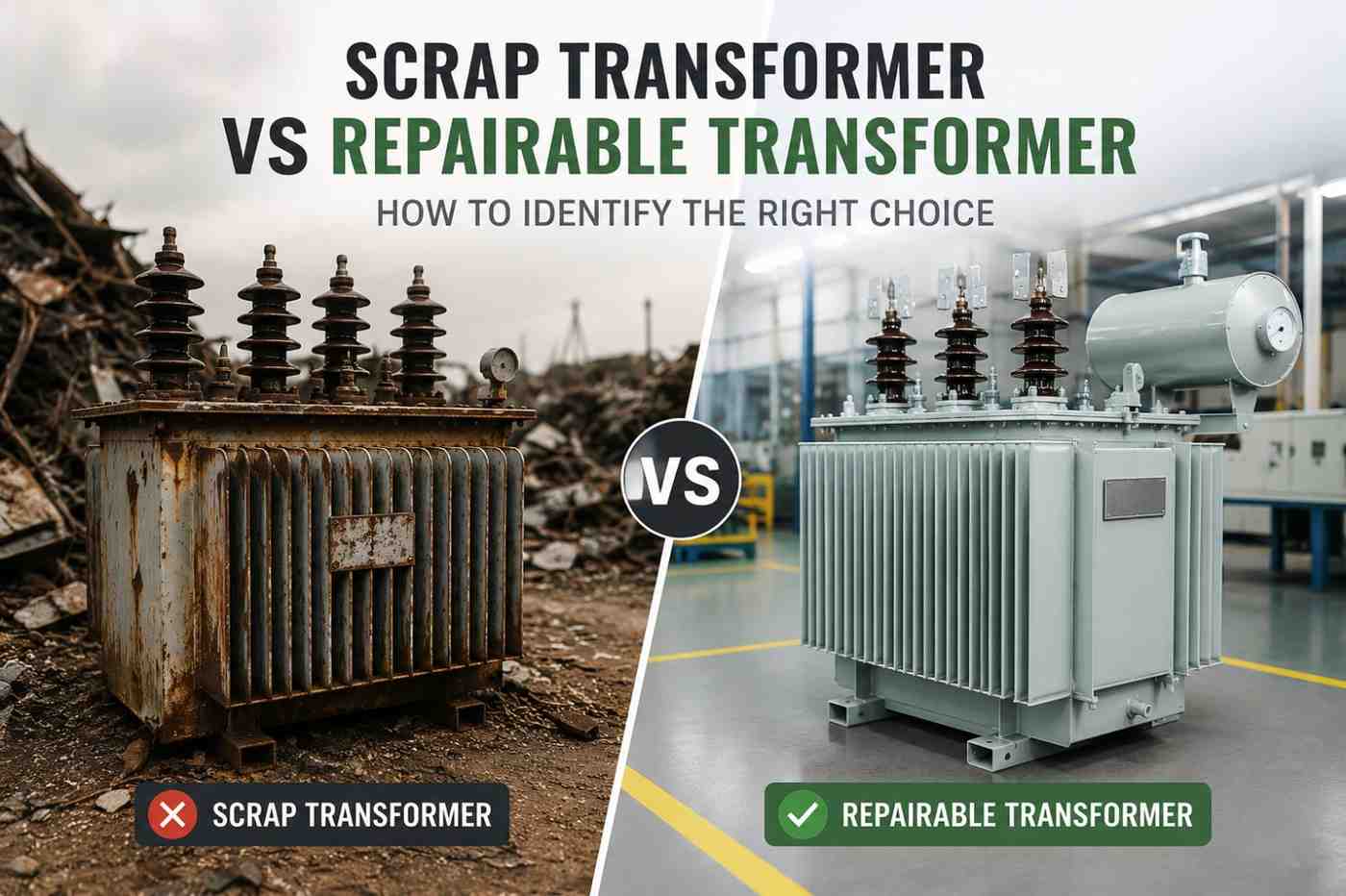
A scrap transformer has suffered extensive damage and is no longer practical or safe to repair. In most cases, the cost of restoring the equipment is higher than its remaining value. These transformers are usually dismantled so that recyclable materials like copper, aluminium, and steel can be recovered.
A transformer may be considered scrap if it has:
- Completely burnt windings
- Severe core damage
- Extensive rust or structural corrosion
- Heavy oil contamination
- Fire or flood damage
- Multiple failed components beyond economical repair
However, not every old or faulty transformer falls into this category. That’s why professional evaluation is always recommended before declaring it as scrap.
What Is a Repairable Transformer?
Repairable transformers are those that suffer from various kinds of faults, but they can be brought back into working order through proper repair work. Various kinds of problems that can be encountered with transformers include the old age of parts, overheating, insulation failure, oil leaks, and loose electrical connections.
Knowing how to spot a repairable transformer takes technical know-how, and honestly, you can not just guess. Usually, experienced engineers take a careful look at the internal parts, as well as the external components, before they say whether fixing it is truly the best option.
In many situations, repairing a transformer is more cost-effective than purchasing a new one, especially when the core and major structural parts remain in good condition.
Scrap Transformer vs Repairable Transformer: Key Differences You Should Know
The Difference Between Scrap Transformer and Repairable Transformer isn’t just about age—it’s about the overall condition of the equipment.
| Scrap Transformer | Repairable Transformer |
| Extensive internal damage | Minor or moderate faults |
| Repair cost is uneconomical | Repair cost is affordable |
| Unsafe for future use | Safe after proper repairs |
| Usually recycled | Can continue operating efficiently |
| Very low operational value | Longer usable service life |
A proper inspection often reveals that a transformer believed to be scrap is actually repairable, saving businesses significant replacement costs.
Why Scrap Transformer Inspection Is So Important
One of the biggest mistakes businesses make is deciding based only on the transformer’s appearance. A transformer may look damaged from the outside while its internal components are still in good condition.
A professional Scrap Transformer Inspection helps identify the actual health of the equipment by checking:
- Winding condition
- Core integrity
- Transformer oil quality
- Insulation resistance
- Bushings and terminals
- Cooling system performance
- Overall structural condition
These tests provide a clear picture of whether the transformer deserves a second life or should be recycled.
Transformer Condition Assessment Helps You Make the Right Decision
Transformer Condition Assessment, a thorough examination technique, is probably the best way of knowing about the future of any transformer. It is not based on any assumptions; rather, it involves certain tests that check the transformer’s condition both electrically and mechanically.
The assessment helps answer important questions such as:
- Is the transformer safe to operate?
- How much life is left?
- Will repairs be reliable?
- Is replacement a better investment?
- What will be the long-term maintenance cost?
Having these answers makes the decision much easier and more financially sound.
Transformer Repair vs Replacement: Which Option Makes More Sense?
There is no definitive answer when it comes to Transformer Repair vs Replacement. This all depends on the state of the transformer and the associated costs.
Repair is usually the smarter option when:
- Only a few components need replacement.
- The transformer core is still healthy.
- Repairs can significantly extend service life.
- Repair costs are much lower than buying a new transformer.
Replacement or scrapping becomes the better choice when:
- The transformer has severe internal damage.
- Safety cannot be guaranteed after repairs.
- The repair cost approaches or exceeds replacement cost.
- The equipment has reached the end of its operational life.
A professional evaluation ensures you’re making a decision based on facts rather than guesswork.
Don’t Skip Professional Testing
Every transformer tells a different story. Some units that appear beyond repair can often be restored, while others with minor visible damage may have serious internal issues.
That’s why businesses rely on experts providing Electrical transformer repair services to inspect and restore valuable equipment whenever possible. Likewise, advanced Power transformer testing Services help identify hidden faults, measure performance, and determine whether repairing the transformer is a practical and cost-effective solution.
Conclusion
The correct decision for Scrap Transformer vs Repairable Transformer not only concerns savings but also involves matters of safety and dependability. A proper inspection and assessment can help in determining whether the transformer will continue functioning effectively in the coming years or should be scrapped and recycled.
Before you invest in a replacement, always have the transformer checked and evaluated by experienced professionals. In many cases, a solid diagnosis can take what seems like scrap and turn it into a fully working asset. This helps you cut costs while also extending the service life of your electrical equipment.