Distribution Transformer vs Power Transformer: What’s the Real Difference?
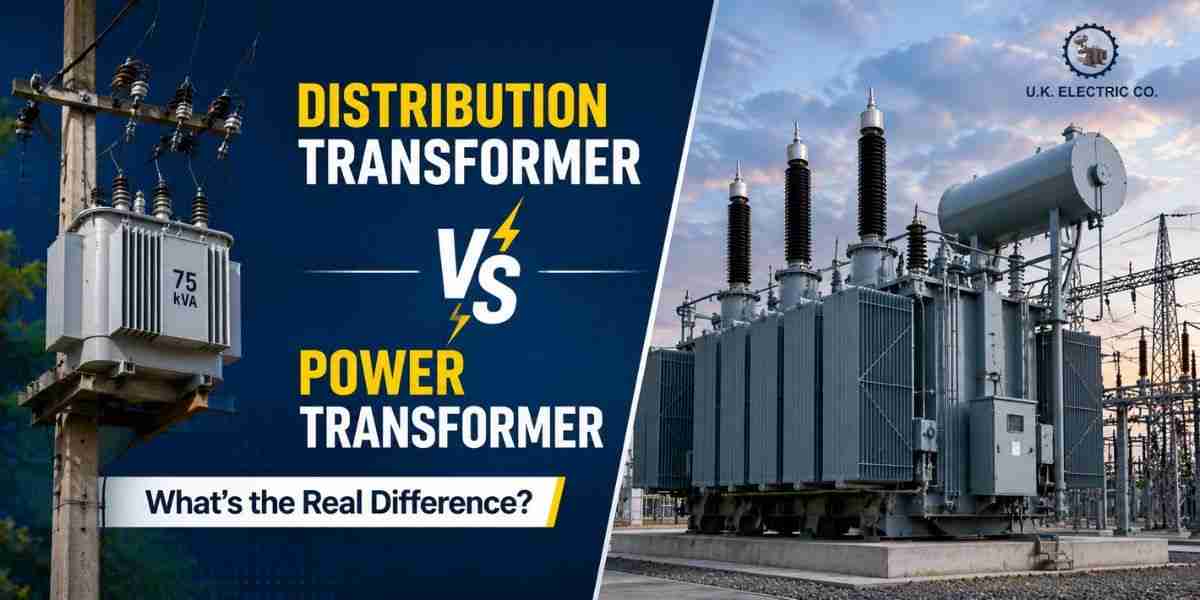
If you work around electrical equipment, you have probably heard the terms power transformer and distribution transformer used almost interchangeably. They both transfer electrical energy, but they serve different jobs in the power system. Understanding that difference can help with equipment selection, transformer maintenance, testing, and repair. For businesses managing ageing or faulty equipment, professional Transformer Repair & Maintenance Services can also help maintain dependable electrical performance and reduce avoidable downtime.
In simple terms, a power transformer generally supports the higher-voltage parts of the electrical network, while a distribution transformer performs the final voltage transformation closer to consumers. However, the real distinction involves much more than voltage or capacity. Let’s break it down without turning the subject into an electrical engineering exam.
What Is a Power Transformer?
A power transformer transfers electrical energy between circuits at different voltage levels and forms an important part of generation and transmission systems. International and Indian standards cover power transformers through the IEC 60076 and IS 2026 series, including requirements related to ratings, testing, insulation, temperature rise and short-circuit withstand capability.
Depending on the application, a power transformer may work as a step-up transformer or step-down transformer. A generating station, for example, may use a step-up arrangement to raise voltage before transmission, while substations can use transformers to reduce voltage for the next stage of the network.
Power transformer design therefore focuses heavily on factors such as transformer capacity, transformer voltage rating, transformer losses, transformer efficiency, insulation and cooling. The exact specification depends on the electrical system rather than a single universal definition.
What Is a Distribution Transformer?
A distribution transformer performs the final voltage transformation within a distribution circuit or closer to the end user. BIS describes distribution transformers as equipment that provides the final voltage transformation in a distribution circuit or to an end user.
In India, distribution systems commonly include 11 kV, 22 kV and 33 kV levels, with lower-voltage supply delivered to consumers. BIS also identifies distribution transformers covered by relevant Indian Standards up to 2,500 kVA and 33 kV for specified applications.
This is where a distribution transformer becomes especially important for safe power distribution and a stable voltage supply. Its job may sound straightforward, but reliable operation depends on good transformer construction, appropriate transformer insulation, efficient cooling and proper maintenance.
Also Read: Does Monsoon Season Damage Transformers? What Delhi/NCR Facilities Should Check
Distribution Transformer vs Power Transformer: Key Differences
The easiest way to understand the distribution vs power transformer comparison is to look at their purpose, operating conditions and design priorities.
| Feature | Power Transformer | Distribution Transformer |
| Main role | Transmission and substation applications | Final voltage transformation in distribution networks |
| Typical position | Generation plants and substations | Distribution networks and end-user supply |
| Primary focus | Efficient energy transfer at system-level loads | Reliable supply under distribution load conditions |
| Voltage | Often associated with higher-voltage systems | Generally used closer to consumer voltage levels |
| Capacity | Often larger, depending on application | Generally smaller, although ratings vary |
| Voltage regulation | Important to system design | Particularly important for consumer supply |
| Construction | Designed for demanding system requirements | Designed for reliable distribution service |
| Maintenance | Detailed electrical, mechanical and oil-related checks | Routine inspection, testing and condition monitoring |
The table gives you the broad picture, but it is worth remembering that transformer classification is not based on one simple number. Standards define different transformer categories and applications, so statements such as “every power transformer is above X MVA” can be misleading.
1. Application and Location
The biggest difference is where the transformer works in the electrical network.
Power transformers commonly serve generation, transmission and substation functions. Distribution transformers operate further downstream, where electrical energy moves toward businesses, buildings and other consumers.
That difference influences transformer design, load characteristics and operating priorities.
2. Transformer Capacity and Voltage
Capacity and voltage are useful comparison points, but they should not be treated as absolute dividing lines.
A power transformer may be designed for high-voltage, high-capacity applications, while distribution transformers commonly serve lower-voltage distribution circuits. BIS standards, for example, specify particular distribution transformer applications and ratings rather than suggesting one universal rating for every distribution transformer.
So, when comparing two transformers, always check their rated voltage, rated power, frequency, impedance and application rather than judging them by capacity alone.
3. Load and Efficiency
Another important difference is how the transformer operates under load.
Power transformer design places considerable attention on efficient energy transfer, thermal performance and transformer losses under its intended system conditions. Distribution transformers, meanwhile, must perform reliably as loads change throughout the day.
Why does that matter?
Because a distribution network does not magically maintain the same demand every minute. Homes, offices and industrial facilities switch equipment on and off. Good transformer design therefore supports consistent transformer performance across expected operating conditions.
4. Voltage Regulation
Transformer voltage regulation matters in both categories, but it becomes particularly noticeable in distribution applications because the transformer supplies downstream users.
A well-designed distribution system aims to maintain a suitable voltage at the consumer end. Modern distribution technologies can also incorporate voltage-regulating equipment. IEC 60076-24, for example, covers voltage-regulating distribution transformers and their voltage-control functions.
Transformer Construction and Cooling
A transformer may look like a large metal box from the outside, but there is quite a lot happening inside.
Its major components can include the transformer core, transformer winding, insulation system, transformer bushing, cooling equipment and, on suitable oil-immersed designs, components such as a conservator tank, transformer radiator and transformer breather.
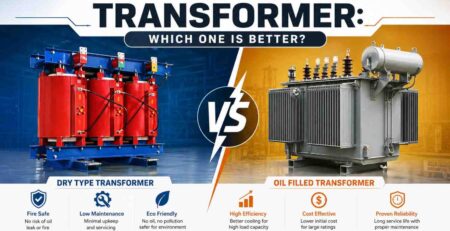
Common transformer types include oil-immersed transformer and dry-type transformer designs. Cooling arrangements can vary according to transformer design and application. For oil-immersed equipment, examples include ONAN and ONAF cooling arrangements.
Some larger transformers may also use an OLTC (on-load tap changer) to regulate voltage while the transformer remains energised. Other equipment may use an off-load tap changer, which requires the transformer to be de-energised before changing the tap position.
The important point is that component selection follows the transformer’s intended application. There is no universal “best” construction for every electrical system.
Why Transformer Testing and Maintenance Matter
Whether you are dealing with a power transformer or distribution transformer, preventive attention can support long-term operational reliability.
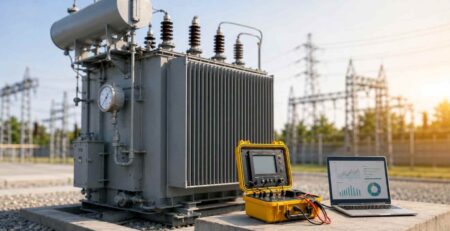
Maintenance may include inspection of oil condition, cooling systems, bushings, connections, insulation and tap-changing equipment. Electrical testing can help identify developing problems before they become major failures.
Transformer oil also deserves attention in oil-filled equipment. Moisture and contamination can affect insulation performance, which is why oil condition and appropriate testing form part of transformer maintenance practices.
For organisations responsible for ageing equipment, Electrical Transformer Repair Services can become necessary when inspection reveals winding problems, insulation deterioration, leakage, overheating or other faults.
U.K. Electric Co. states that it provides transformer repair, servicing, modification, testing, overhauling, leakage arresting, and transformer oil dehydration and filtration services. Its website also states that the company has worked with power and distribution transformers up to 25 MVA and 11, 33, 66 and 132 kV classes in Delhi since 1978.
The company also reports having 3,200-litre and 6,000-litre ultra/high-vacuum dehydration and filtration plants for transformer oil treatment.
Can Power and Distribution Transformers Be Repaired?
Yes, transformers can often be repaired, but the correct approach depends on the fault and the equipment’s condition.
A professional assessment may involve inspection, diagnostic testing, oil assessment, electrical checks and physical examination. Depending on the findings, the work could range from servicing and oil treatment to more extensive repair or rewinding.
That is why choosing transformer repair should not be based on price alone. Technical capability, testing facilities, experience with different transformer makes and the ability to diagnose the actual fault all matter.
U.K. Electric Co. specifically lists repairing, rewinding, dehydration and filtration, overhauling, leakage arresting and transformer testing among its services.
Distribution vs Power Transformer: Which One Is Better?
Neither is simply “better.” They perform different jobs.
A power transformer is suited to its intended generation, transmission or substation application, while a distribution transformer is designed for the distribution stage and final voltage transformation.
The better question is:
Which transformer is appropriate for my electrical system?
That decision should consider the required voltage, capacity, load profile, installation conditions, cooling arrangement, insulation requirements, protection system and applicable standards.
And when an existing transformer develops a problem, repairing the equipment may be a practical option depending on its condition and the nature of the fault.
Distribution vs Power Transformer: Key Takeaways
The difference between a power transformer and a distribution transformer comes down primarily to its application, position in the electrical network, operating conditions, and design requirements.
Both play an essential role in maintaining a reliable power supply, but choosing the right transformer requires more than relying on simple rules of thumb. Correct ratings, proper testing, suitable protection, and regular condition assessment all contribute to safe and dependable operation.
Need professional transformer repair, testing, or maintenance support? Contact U.K. Electric Co. today to discuss your transformer requirements. Our experienced team provides reliable solutions for power and distribution transformers, including repair, servicing, modification, testing, and oil dehydration and filtration. Get in touch with U.K. Electric Co. to discuss your transformer service needs.