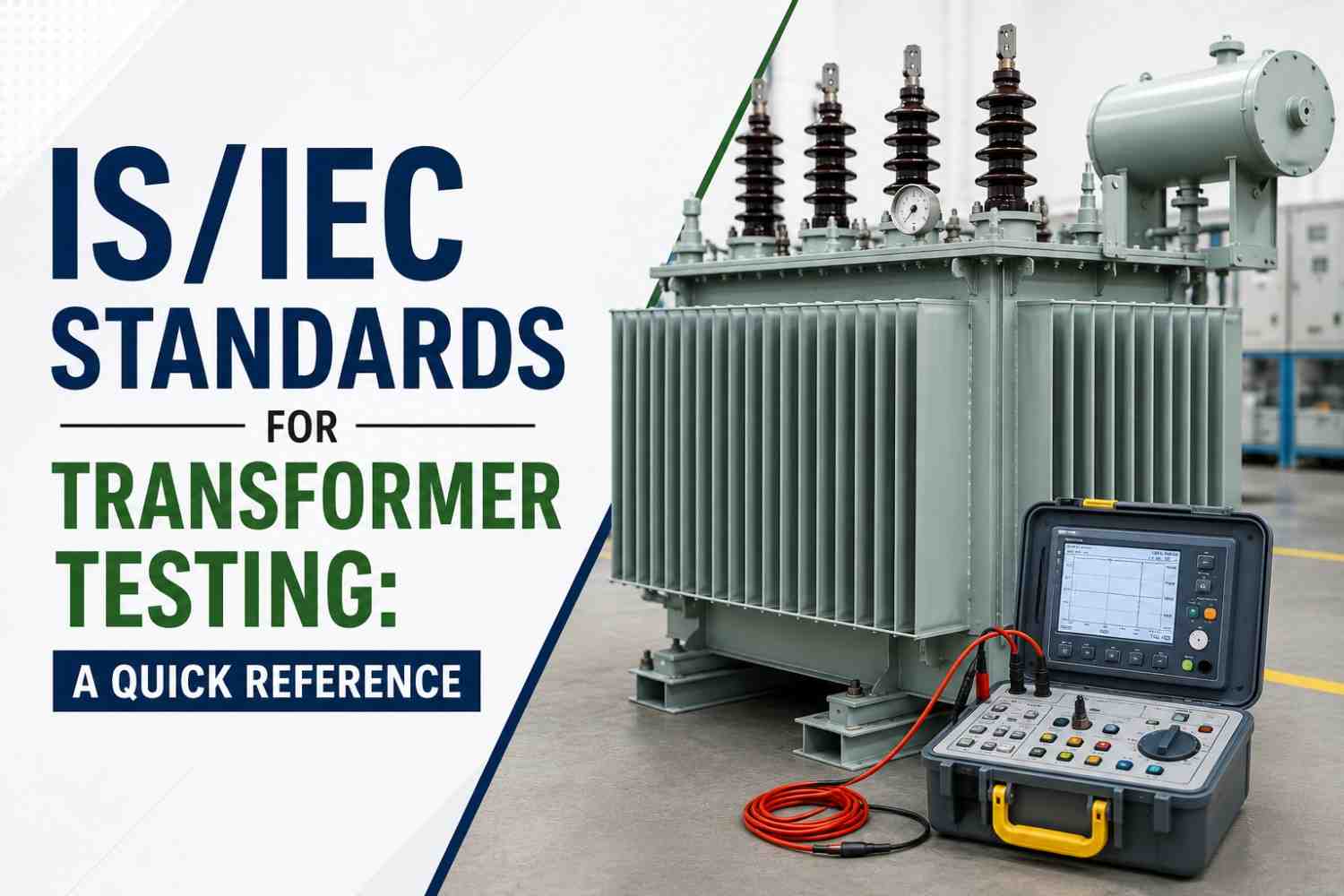
IS/IEC Standards for Transformer Testing: A Quick Reference
When it comes to transformers, performance alone isn’t enough—safety, reliability, and compliance are equally important. Whether a transformer is installed in an industrial plant, a commercial facility, or a power distribution network, it must undergo proper testing before it is put into service. This is where IS IEC transformer testing standards play a crucial role.
These standards provide a common framework for manufacturers, testing laboratories, and service providers to evaluate transformer quality and performance. By following recognized testing procedures, businesses can ensure that transformers operate safely, meet design specifications, and deliver reliable performance throughout their service life.
In this quick reference guide, we’ll explain what IS IEC transformer testing standards are, why they matter, and the essential tests covered under these guidelines.
What Are IS/IEC Transformer Testing Standards?
IS IEC transformer testing standards refer to the testing requirements defined under Indian Standards (IS) and the International Electrotechnical Commission (IEC). These standards establish uniform procedures for inspecting and testing transformers to verify their electrical, mechanical, and thermal performance.
In India, transformer testing is usually based on IS Standards for Transformer Testing, but on international projects, people often go with IEC standards, especially the IEC 60076 series. Together, these frameworks help keep things consistent in testing procedures, safety requirements, and overall product quality across different sectors, where it matters.
Following these standards also makes it easier for manufacturers and end users to compare transformer performance and maintain compliance with industry regulations.
Why Are Transformer Testing Standards Important?
A transformer may appear to be in perfect condition externally, but hidden issues such as insulation defects, winding problems, or internal faults can only be identified through proper testing.
Following the IS IEC transformer testing standards helps organizations:
- Verify transformer quality before installation
- Improve operational safety
- Reduce the risk of unexpected failures
- Ensure compliance with national and international regulations
- Increase transformer reliability and service life
- Detect manufacturing defects before commissioning
Whether the transformer is newly manufactured or undergoing maintenance, standardized testing provides confidence that it will perform safely under operating conditions.
Key Tests Covered Under IS/IEC Standards
Modern Transformer Testing Standards include several routine, type, and special tests. Each serves a specific purpose in evaluating transformer performance.
1. Insulation Resistance (IR) Test
This test is performed on the insulating value between the transformer windings and ground. Insulation with low resistance might suggest that moisture, dirt, or bad insulating materials are present.
This is one of the most common tests performed before transformer commissioning.
2. Turns Ratio Test (TTR)
The Turns Ratio Test verifies that the voltage ratio between the primary and secondary windings matches the design specifications.
Any variation beyond acceptable limits may indicate winding damage or incorrect tap changer settings.
3. Winding Resistance Test
This test measures the resistance of transformer windings to identify loose joints, damaged conductors, or poor electrical connections.
Accurate winding resistance measurements also help assess the overall condition of the transformer.
4. Dielectric Tests
Dielectric tests evaluate the transformer’s ability to withstand high voltage without insulation failure.
Under IEC Standards for Power Transformers, these tests ensure that insulation systems can safely operate under normal and abnormal voltage conditions.
5. Transformer Oil Testing
Transformer oil acts as both an insulating and cooling medium.
Testing the oil helps determine:
- Dielectric strength
- Moisture content
- Contamination levels
- Oil quality
Regular oil testing plays an important role in maintaining transformer reliability and extending equipment life.
Routine, Type, and Special Tests
One of the key features of the IS IEC transformer testing standards is the classification of transformer tests into different categories.
Routine Tests
Routine tests are performed on every transformer before delivery. These include:
- Insulation resistance testing
- Winding resistance testing
- Turns ratio testing
- No-load current measurement
- Load loss measurement
These Transformer Routine Test Standards confirm that each transformer meets basic quality requirements.
Type Tests
Type tests are conducted on representative transformer models to verify overall design performance.
They generally include:
- Temperature rise test
- Lightning impulse test
- Short-circuit withstand test
These tests ensure the transformer design complies with applicable standards.
Special Tests
Special tests are carried out only when required by the customer or project specifications.
Examples include:
- Sound level measurement
- Vacuum testing
- Zero-sequence impedance test
- Partial discharge testing
IS Standards vs IEC Standards
Although both standards share similar objectives, there are slight differences in documentation and technical requirements.
IS Standards for Transformer Testing are primarily intended for the Indian market and align closely with local regulations.
On the other hand, the IEC standards for power transformers are internationally accepted and kind of widely used in global infrastructure and industrial projects, as well.
Many manufacturers today design and test transformers to satisfy both standards, ensuring wider acceptance across domestic and international markets.
Why Professional Testing Matters
Testing transformers is not something you just “do” casually; you need specific instruments, technical competence and also a decent grasp of the relevant standards. If the testing approach is off or the results get read shakily, then maintenance decisions can go wrong, and you can end up with costly malfunctions, and it’s a real pain to unwind later.
Choosing experienced providers offering Power transformer testing Services ensures that every test is conducted according to recognized industry standards. Professional testing not only improves safety but also provides accurate reports that support maintenance planning, compliance, and long-term transformer performance.
Conclusion
Following IEC transformer testing standards is essential for ensuring transformer safety, quality, and long-term reliability. It’s like, from insulation resistance testing and winding resistance checks all the way through dielectric testing and oil analysis, each procedure somehow helps spot possible troubles early before they turn into serious problems. At U. K. Electric Co., we follow these testing standards to help ensure transformers perform safely, efficiently, and reliably throughout their service life.
Whether you’re working with Transformer Testing Standards, complying with IS Standards for Transformer Testing, or following IEC Standards for Power Transformers, standardized testing provides confidence that your transformer is ready for safe and efficient operation. By adhering to these Power Transformer Testing Guidelines, businesses can minimize risks, improve equipment life, and maintain reliable power systems for years to come.