Dry Type vs Oil Filled Transformer: Which One Is Better?
The choice between a dry and an oil-filled one is based on the location and the way you intend to utilize it. In essence the dry-type transformers will be more secure and are better suited to indoor settings, while oil-filled transformers provide greater efficiency and are suitable for industrial or outdoor applications. If your primary concern is security and minimal maintenance opt for dry type. However, if the performance and load capacity are more important, then oil-filled is the best choice.
Transformers play a crucial function in the distribution of power, and choosing the wrong model could result in higher costs, safety issues, or reduced efficiency. That’s why understanding the dry type vs oil filled transformer comparison is essential before making a decision. By knowing the differences between dry type and oil filled transformers and comparing their performance, advantages, and real-world applications, you can easily determine which option is more suitable based on your specific requirements.
Understanding the Difference Between Dry Type and Oil Filled Transformer
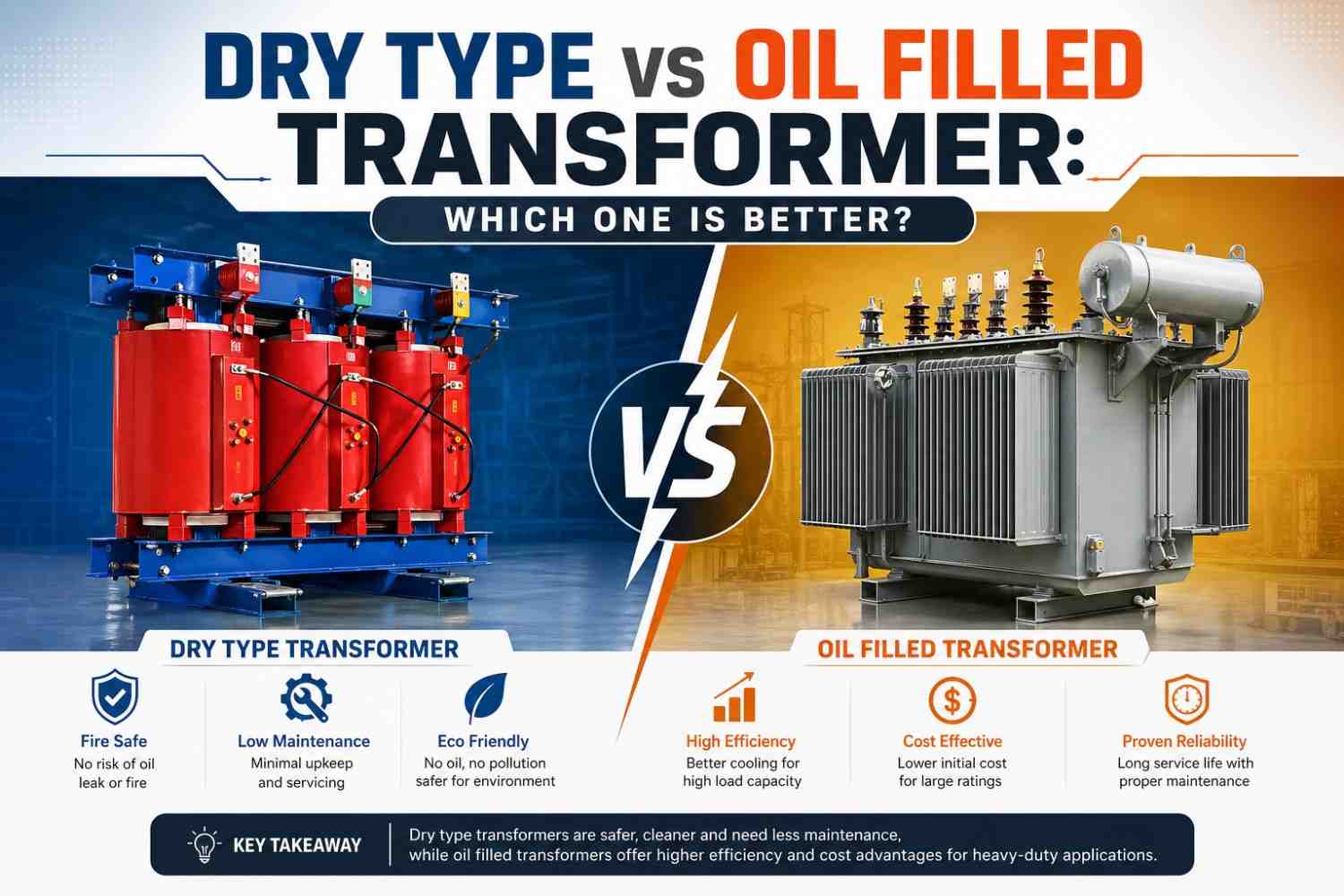
The primary difference between a dry type transformer and an oil-filled transformer lies in their cooling techniques and construction.
- Dry Type Transformer Utilizes air to cool and doesn’t contain any liquid insulation.
- Oil Filled Transformers: Uses insulation oil to cool and insulation, which makes it more efficient in high-load processes.
This fundamental distinction impacts the safety, performance, maintenance and the installation requirements.
Dry Type Transformer Advantages and Disadvantages
Prior to making a decision, it is important to consider the advantages of dry type transformers and disadvantages.
Advantages:
- Higher Safety: No oil implies less risk of fire hazards
- Low Maintenance: Requires less frequent servicing
- Eco-Friendly: There is no risk of contamination or leakage from oil.
- Perfect for indoor use Ideal for hospitals, malls, and commercial structures
Disadvantages:
- Lower Efficiency It is not so efficient as oil filled transformers when loaded with heavy loads.
- Higher Cost: The initial investment could be higher
- Limited Capacity: Not recommended for extreme power requirements.
Dry types of transformers are ideal for areas where safety and minimum maintenance are important.
Oil Filled Transformer Benefits and Uses
Now let’s take a look at oil-filled transformer’s benefits and their uses, particularly in industrial applications.
Benefits:
- High Efficiency: A better cooling allows handling of large loads
- More Long-Lasting Lifespan: Oil assists in decreasing wear and tear
- Cost-Effective: Generally less initial cost than dry types
- For outdoor use Used extensively in industries and power distribution
Common Uses:
- Power plants
- Industrial units
- Outdoor substations
- Large-scale electrical distribution systems
The advantages of these transformers that are oil-filled and functions make them an ideal option for operations that require a lot of attention.
Dry Type vs Oil Filled Transformer: Key Comparison
In comparing dry type transformers vs. oil filled transformers, think about the following aspects:
Safety
Dry-type transformers are more secure because they do not contain an oil that is flammable. Transformers with oil are at the risk of catching fire if they’re not maintained in a timely manner.
Maintenance
Dry type transformers need minimal maintenance, whereas oil-filled transformers require regular oil testing and monitoring, often making transformer repair services essential for maintaining their performance and safety.
Efficiency
Oil-filled transformers perform better, particularly when they are under high loads due to the better dispersal of heat.
Installation Location
- Dry Type – Indoor use
- Oil Filled – outdoor or industrial use
Cost
Transformers that are filled with oil are generally less expensive initially, while dry type transformers might be more expensive upfront, but they will reduce maintenance costs.
Which Transformer Is Better Dry or Oil Filled?
The question of which transformer is more efficient either oil or dry does not have a universal solution.
- Select a dry type transformer if you want safety, minimal maintenance, or indoor installation.
- Select a transformer with oil for durable, high efficiency and a large capacity.
Your choice should be based on the nature of your project, the conditions and your budget.
How to Choose the Right Transformer for Your Needs
To make the best decision in the dry type vs oil filled transformer comparison, take into consideration these aspects:
- Location: Indoor or outdoor installation
- The load requirement is light or heavy electrical load
- Safety Issues: Fire Risk and environmental risks
- Budget: Cost of initial cost vs. maintenance for the long-term
- Application Type: Residential, commercial or industrial
Analyzing these aspects can help you choose the right transformer for your particular situation.
Final Thoughts
The decision to choose between dry type and oil-filled transformer will depend on the priorities you place. If safety and ease of maintenance are your top concerns, dry type transformers are a better alternative. However, if efficiency and high performance are more important, oil-filled transformers are the best choice. For expert guidance and reliable solutions, U.K Electric Co can help you select the right transformer based on your specific requirements.