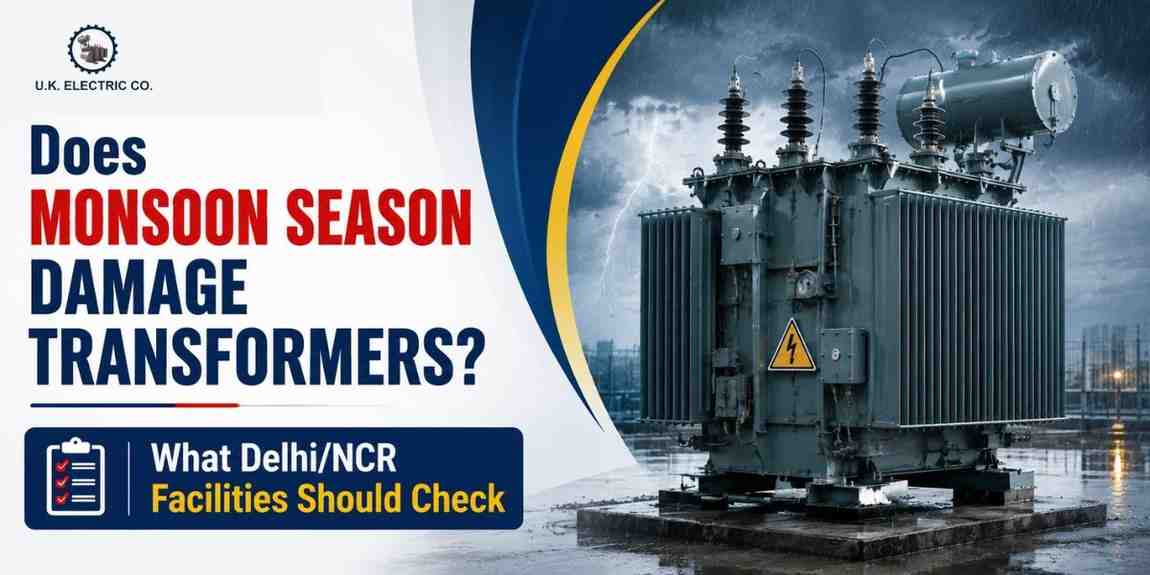
Does Monsoon Season Damage Transformers? What Delhi/NCR Facilities Should Check
Monsoon is a welcome change after Delhi’s summer heat, but facility managers know the rain can bring a different kind of headache: waterlogged areas, damp electrical rooms, blocked drains and moisture around critical equipment. For facilities that depend on transformers, this is the time to take transformer safety concerns seriously. If you need Electrical Transformer Repair Services, a professional inspection can help identify problems before they turn into an unexpected shutdown. The important point, however, is that rain itself does not automatically damage a transformer. Moisture, water ingress, poor drainage, contamination, corrosion and neglected maintenance create the real risk.
For businesses across Delhi NCR, including Delhi, Noida, Gurugram, Ghaziabad and Faridabad, a sensible transformer monsoon maintenance India strategy should focus on prevention rather than waiting for a fault.
Why Does Monsoon Matter for Transformers?
Before discussing the checklist, it helps to understand what changes during the rainy season. Monsoon conditions can expose weaknesses that may remain unnoticed during dry weather.
The India Meteorological Department monitors rainfall across Delhi and surrounding regions, and its records show that Delhi can experience substantial rainfall during the June-to-September southwest monsoon period. For example, IMD recorded above-normal monsoon rainfall at several Delhi observatories in 2025.
That matters because a transformer installation does not exist in isolation. Its surrounding room, enclosure, cable trenches, drainage, ventilation and electrical connections all influence reliable transformer operation.
Moisture Is the Real Enemy
A transformer depends heavily on the condition of its insulation system. Excess moisture or water contamination can therefore become a serious maintenance concern.
Facilities should pay attention to:
- Water entering transformer rooms
- Dampness around cable entries
- Roof or wall leakage
- Standing water near equipment
- Damaged seals and gaskets
- Moisture around electrical connections
- Poorly protected outdoor equipment
A little rainwater outside the transformer may not seem dramatic. Water sitting where it should not be, however, deserves immediate attention.
BIS maintains standards covering distribution and power transformers, including the IS 1180 and IS 2026 series. Its published material also covers areas such as transformer temperature rise, insulation and dielectric testing.
What Should Delhi/NCR Facilities Check Before Monsoon?
A good pre monsoon transformer inspection should start before heavy rainfall becomes routine. The objective is simple: find weaknesses while the transformer is still operating normally.
1. Inspect the Transformer Room and Drainage
Start with the basics. Check the roof, walls, doors, ventilation openings and cable-entry points for potential water ingress.
Then inspect the drainage around the transformer installation.
Blocked drains can turn heavy rain into standing water surprisingly quickly. Facilities should make sure water has a clear route away from electrical equipment.
The CEA publishes specific guidance and best practices for operation and maintenance of distribution transformers, alongside its electrical safety regulations for construction, operation and maintenance.
2. Check for Oil Leakage and Oil Condition
For oil-filled transformers, maintenance teams should look for visible oil leakage, abnormal oil levels and signs of deterioration around tanks, joints and seals.
Do not treat an oil leak as a cosmetic issue. Transformer oil plays an important insulating and cooling role, so unexplained leakage requires proper assessment.
Where testing is appropriate, facilities should follow the equipment manufacturer’s recommendations and their established maintenance program. Transformer standards and testing practices cover relevant parameters such as insulation, temperature rise and liquid-related testing.
3. Inspect Bushings, Terminations and Connections
Bushings, cable terminations and electrical connections deserve careful inspection during transformer maintenance during rainy season.
Look for:
- Cracks or physical damage
- Contamination
- Signs of tracking
- Corrosion
- Loose connections
- Damaged insulation
- Moisture around terminations
These checks should be performed by suitably qualified personnel. High-voltage equipment is not the place for a casual DIY experiment.
Transformer Maintenance in Monsoon: What Else Matters?
Once the physical condition looks satisfactory, the maintenance team should consider the transformer’s operating condition and protection systems.
4. Check Cooling and Temperature
Transformers generate heat during operation, so cooling systems need to remain functional.
Depending on the transformer design, inspection may include cooling fans, radiators, temperature indicators and associated controls.
Unusual temperature readings should not be ignored, especially when the transformer is carrying significant load.
The BIS material on IS 2026 includes requirements and test methods relating to transformer temperature rise, highlighting why thermal performance remains an important part of transformer assessment.
5. Verify Protection and Earthing
A transformer maintenance checklist should also include relevant protection equipment and earthing arrangements.
Maintenance teams can review the condition and operation of applicable:
- Protection relays
- Circuit breakers
- Alarms
- Trip mechanisms
- Earthing connections
- Surge protection equipment
The exact tests and intervals should depend on the transformer design, installation and applicable maintenance requirements rather than a one-size-fits-all internet checklist.
CEA’s electrical safety framework specifically addresses the construction, operation and maintenance of electrical plants and lines.
What About Oil-Filled Transformers?
Oil-filled power transformers and distribution transformers require particular attention to their insulating liquid and moisture control.
Where applicable, teams should inspect the conservator, breather, seals and associated components. A breather that has reached the end of its service condition should receive attention according to the manufacturer’s maintenance procedure.
Oil testing can also provide useful information about transformer condition. However, facilities should not order tests simply because they appear on a generic checklist. The appropriate testing program should consider the transformer’s age, design, operating history, condition and manufacturer’s recommendations.
This approach supports transformer preventive maintenance while avoiding unnecessary testing.
Don’t Forget the Post-Monsoon Inspection
Many facilities prepare before the rain and then forget about the transformer once the skies clear.
That is a mistake.
A post monsoon transformer inspection can identify problems caused or exposed during the rainy period. Check for new corrosion, water accumulation, damaged seals, oil leakage, contaminated components and any unusual operating behaviour.
Review maintenance records as well. Did the transformer experience repeated trips, unusual temperatures, alarms or voltage-related issues during the season?
These observations can help maintenance teams decide whether further investigation or professional Transformer Repair & Maintenance Services is necessary.
A Practical Transformer Inspection Checklist
For facility managers, the following simplified transformer inspection checklist provides a useful starting point:
| Inspection area | What to look for |
| Transformer room | Leaks, dampness and water accumulation |
| Drainage | Blockages and standing water |
| Transformer tank | Corrosion, damage and leakage |
| Oil system | Level, leakage and condition |
| Bushings | Cracks, contamination and damage |
| Cable entries | Proper sealing and moisture ingress |
| Connections | Corrosion, looseness and overheating signs |
| Cooling | Fans, radiators and temperature indicators |
| Earthing | Physical condition and required testing |
| Protection | Relays, alarms and trip functions |
| Surroundings | Debris, vegetation and flood risk |
| Records | Previous faults, alarms and maintenance history |
This checklist should support, not replace, the manufacturer’s instructions, site procedures and qualified electrical inspection.
When Should You Call a Transformer Specialist?
Some problems should not wait for the next scheduled maintenance visit.
Visible oil leakage, repeated tripping, abnormal temperature, damaged bushings, unusual noise, burning smell, insulation concerns or water reaching electrical components warrant professional assessment.
A specialist can determine whether the problem needs testing, on-site maintenance, oil treatment, repair or a more detailed overhaul.
For facilities that require Electrical Transformer Repair Services, U.K Electric Co. states that it handles repair, servicing and modification of power and distribution transformers of various makes, up to 25 MVA and across 11, 33, 66 and 132 kV classes in Delhi. The company also states that it has operated since 1978 and provides transformer oil dehydration and filtration facilities.
U.K Electric Co. also publishes information about its repair, rewinding, testing, overhauling, leakage-arresting and oil filtration capabilities.
For an organisation responsible for critical electrical infrastructure, the goal is not simply to repair a transformer after failure. The better approach is to improve transformer reliability, minimise electrical downtime and identify developing problems early.
How U.K Electric Co. Can Support Transformer Maintenance
U.K Electric Co. positions its services around transformer repair and maintenance, including power and distribution transformer servicing, oil dehydration and filtration, testing, rewinding and overhauling. Its published company information states that it has facilities and technical resources for transformers up to 25 MVA and 11, 33, 66 and 132 kV classes.
The company also states that Kirloskar Electric Co. Ltd., Bangalore and Pune, has appointed U.K Electric Co. as an authorised service centre for transformer repairs. This is a company-reported credential, so facilities should verify the current scope directly when engaging the service provider.
For facilities dealing with recurring faults or ageing equipment, professional Transformer Repair & Maintenance Services can form part of a broader preventive maintenance strategy.
Final Thoughts: Does Monsoon Really Damage Transformers?
Not by itself. A properly maintained transformer should not suddenly fail simply because the rainy season arrives.
The bigger concern is what monsoon conditions can expose: poor drainage, water ingress, damaged seals, corrosion, moisture-related insulation concerns, oil leakage and neglected electrical connections.
For facilities across Delhi/NCR, good monsoon transformer safety starts with a straightforward principle: inspect before the problem becomes an outage.
Carry out a pre-monsoon inspection, monitor the transformer during heavy rainfall, keep drainage clear and perform a post-monsoon assessment. Where you find abnormal conditions, involve qualified professionals rather than taking chances with high-voltage equipment.
Need professional transformer inspection, repair or maintenance? Contact U.K Electric Co. today for reliable transformer repair and servicing support.
After all, rainwater belongs in the drainage system, not in your transformer room.